



Illinois Solar for All Keeps the Momentum Going This Fall
Stay connected with the latest ILSFA news and updates.
Program Information
Helping Residents Across Illinois Save Money on Electric Bills
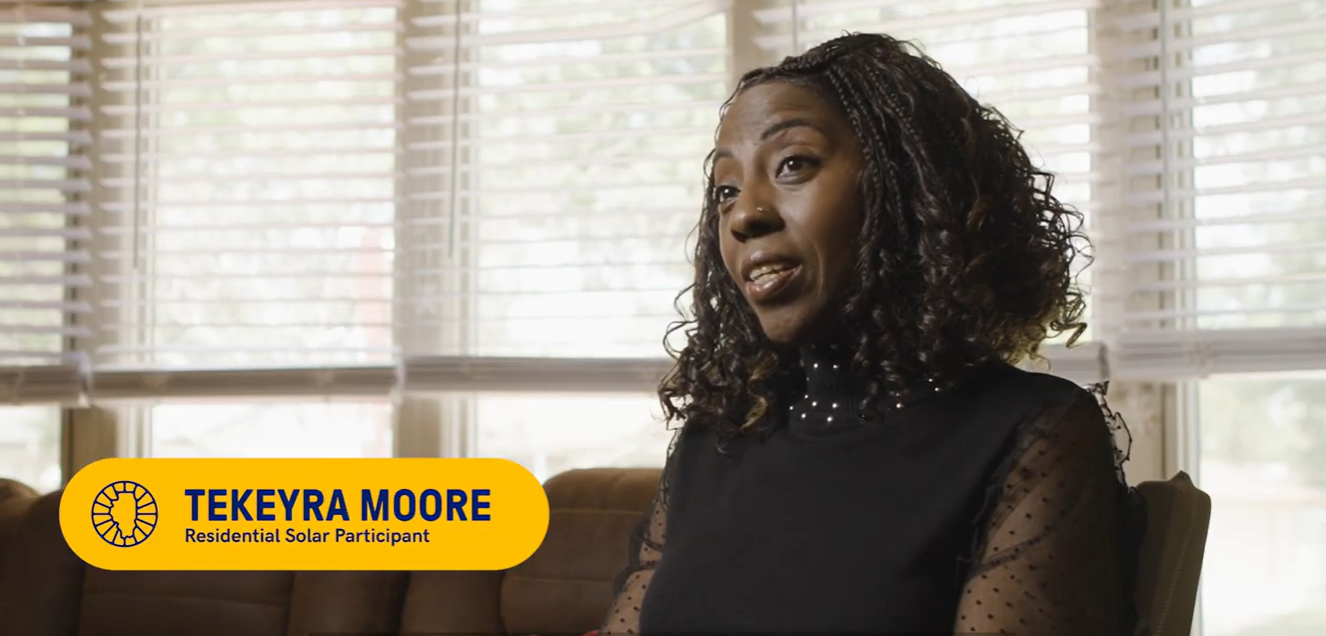
What if the cost of your electric bill was something you could reduce? A new video produced by Illinois Solar for All explains how the three ILSFA sub-programs—Residential Solar, Community Solar, and Non-Profit and Public Facilities—are helping Illinois residents and organizations do just that.
The video highlights stories from real participants who are saving money, like Residential Solar participant Tekeyra Moore. With three sons constantly using electronics and wanting to reduce the family’s overall electric bill, Moore had solar panels installed on her home and is thrilled with the savings. “I just received a bill of $34 and thought my electric company made a mistake!”
Renter Fredy Amador shares how the Community Solar sub-program has helped him save $120 in just three months. Andrew Wells from the Chicago Urban League shares how they reduced operational costs through solar energy savings, freeing up budget that his organization can now use for other priorities.
Learn more about how people and organizations are achieving real savings with ILSFA!
Program Updates
Last Year’s Success Makes Way for A Bright New Program Year
The 2025-2026 Program Year was full of accomplishments and new “firsts” for Illinois Solar for All. Each of ILSFA’s three sub-programs outperformed expectations and reached capacity for the first time in program history—great news because more income-eligible residents and organizations across the state saved money on electric bills!
- Over 1,250 projects were contracted during the 2025-2026 Program Year.
- Of these, 1,194 were Residential Solar (Small and Large) projects.
- 153 Residential Solar (Small) projects participated in the Home Repairs and Upgrades Initiative, which provided electrical upgrades and roof repairs enabling solar installations.
- 59 were Non-Profit and Public Facilities projects.
- 7 were Community Solar projects.
- Of these, 1,194 were Residential Solar (Small and Large) projects.
Community Information
Yeoman Creek Solar Project Provides Savings to Waukegan Residents
In late 2025, a 7 MW Community Solar project came online in Waukegan, Illinois, on a former landfill. The land, owned by Waukegan Community Unit School District 60, served as a dump for municipal and toxic waste from 1958 to 1969, after the site was determined to be unsuitable for construction to build a new high school. Following nearly 20 years of environmental remediation, the site was redeveloped as an Illinois Solar for All Community Solar Project through the Low-Income Community Solar pilot program.
Waukegan Community Unit School District 60 serves as the anchor tenant for the project, receiving 40% of the value of the energy generated credited towards their electricity bill, providing an estimated $195,000 annual savings for the district. The remaining project capacity is reserved for 1,000 ILSFA eligible households in the City of Waukegan.
Featured Question
What are Low-Income Discount Rates?
ComEd is now offering low-income discount rates (LIDRs) to households earning up to 300% of the federal poverty level, and help them keep utility bills affordable. Ameren is expected to roll out its LIDR in coming months.
How do Low-Income Discount Rates Impact ILSFA Savings?
While LIDRs lower electric rates, they can also reduce the amount residents save through ILSFA. Here’s how the program is making changes to increase transparency and preserve savings:
- Savings calculations will no longer be included on the Residential Solar and Community Solar Disclosure Forms because the variability in LIDRs makes it difficult to estimate savings for enrolled participants.
- ILSFA is prioritizing no-cost solar projects from Approved Vendors, which will eliminate ongoing costs paid by participants and help preserve savings.
All ILSFA households meet income requirements for the LIDR. Low-Income Home Energy Assistance Program (LIHEAP) participants are automatically enrolled in an LIDR, and you can also enroll through your local Community Action Agency (CAA). Contact your CAA to enroll today!
Do you have more burning questions? We have the answers! Submit your questions directly to our team, and we’ll address them in future newsletters.